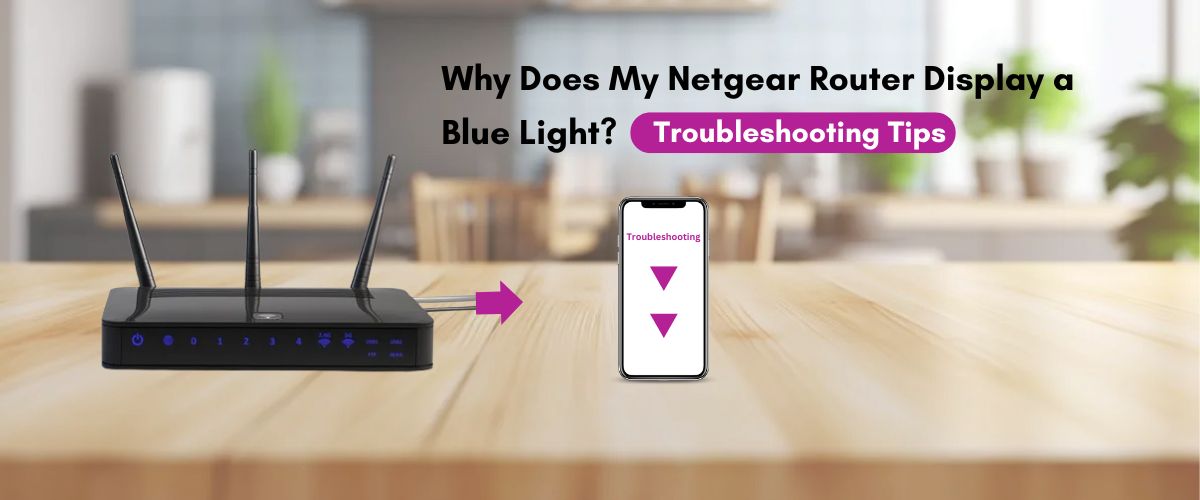
Why Does My Netgear Router Display a Blue Light? Troubleshooting Tips
A steady blue light on a Netgear router generally indicates that the router is operating normally and has an active connection. If the blue light keeps blinking, check the WPS status, internet connection, cables, firmware, and Wi-Fi settings to identify and resolve the issue.
A blue light on a Netgear router is generally a good sign and often indicates that the device is operating normally. However, a blinking blue light can sometimes point to an active WPS process, a firmware update, or a network-related issue. In this guide, we’ll explain what the blue light means, why it may be blinking, and what you can do to troubleshoot the problem.
What Does the Blue Light on a Netgear Router Mean?
The blue light on the Netgear router usually indicates:
- Successful Connection: A solid blue light generally indicates that the router has established an internet connection successfully.
- 5 GHz Band Active: On supported Netgear models, a blue 5 GHz indicator means that the 5 GHz Wi-Fi band is enabled and available for connected devices.
- WPS in Progress: A flashing blue light may indicate that WPS is active and the router is attempting to establish a wireless connection with another device.
Causes of a Blinking Blue Light on a Netgear Router
A Netgear router blinking blue light may indicate:
- WPS Connection in Progress: The router may be blinking blue while it attempts to establish a secure connection through WPS.
- Firmware Update: The blue indicator may flash while the router is installing a firmware update. Allow the update to finish before restarting or disconnecting the router.
- Network Connectivity Problems: An unstable internet connection or communication issue between the router and modem can sometimes cause unusual LED behavior.
- Internal hardware faults: Internal hardware faults may potentially result in a continual blinking blue light.
How To Fix The Netgear Router Blue Light?
Follow these troubleshooting methods to solve your Netgear router blue light:
- Wait for the WPS Process to complete.
- If the light blinks due to WPS setup, wait a few minutes for the connection to complete.
- If it doesn’t stabilize, redo the WPS setup or connect manually.
- Restart your router.
- Turn off the router.
- Unplug it from the power supply.
- Wait 5–10 minutes.
- Plug it back in and power it on.
- Check to see whether the blue light on Netgear router converts firm.
- Check the Internet connection.
- Check whether your ISP’s internet service is currently working.
- Make sure all Ethernet and power cables are securely connected.
- Try connecting another device to rule out ISP problems.
- Netgear router firmware update.
- Open routerlogin.net to access your router’s settings.
- Navigate to the settings dashboard and check for available firmware updates.
- Obtain and fix any updates that are accessible.
- Restart the router and verify the light status.
- Reset the router.
- Trace the reset key.
- Push and hold the knob.
- Wait for your router to reset.
- Execute the Netgear router setup again via Routerlogin net.
- Switch to the 5GHz band.
- If your router supports dual-band Wi-Fi, confirm that the 5 GHz network is enabled.
- Access the router’s settings and verify that the 5 GHz wireless network is turned on.
- Connect supported devices to the 5 GHz network for potentially faster speeds and reduced congestion. If your Netgear router displays a blue 5 GHz light, this generally indicates that the band is active.
- Contact our specialists.
- If these troubleshooting steps do not resolve the problem, contact Netgear support or a qualified technician for further assistance. When seeking help, provide details about the issue, including any recent firmware updates or changes you made to the router’s configuration.
How To Avoid Blue Light Issues In The Future
To reduce the likelihood of encountering the blue light issue again, follow these guidelines:
- Check for firmware updates regularly through the router’s administration page.
- Keep the router in a cool, well-ventilated location to prevent overheating.
- Restart the router periodically to help maintain a stable connection.
- Avoid physical damage and maintain good cable management.
- Use a strong, unique Wi-Fi password and update it periodically to help prevent unauthorized access and keep your wireless network secure.
Final Thoughts
Understanding what the blue light on a Netgear router indicates can help you quickly identify potential connection problems. By checking the router’s network status, WPS activity, cables, firmware, and wireless settings, you can often resolve blinking blue light issues and maintain a stable connection.
FAQs
Does the blue light on my Netgear router mean a strong signal?
A solid blue light generally indicates a successful connection, but it does not necessarily show the strength of your Wi-Fi signal. To evaluate signal quality, check the connection speed on your device or use a Wi-Fi analyzer tool.
How do I turn on the 5GHz Wi-Fi on my Netgear router?
Open routerlogin.net in a web browser and sign in to your router’s administration interface. Go to the Wi-Fi or wireless settings, make sure the 5 GHz network is enabled, and save your changes. Then connect your compatible devices to the 5 GHz network.
Why is my Netgear router’s 5GHz light off?
The 5GHz light may be turned off if the 5GHz band is deactivated in your router’s settings. It may potentially signal hardware or firmware problems. Enable the 5GHz band and keep your firmware up to current.
How to Turn Off the Blue Light on a Netgear Router?
Some Netgear router models allow you to control or disable their LED indicators through the administration settings. Sign in to routerlogin.net, open the advanced settings, and look for an option related to LED or indicator lights. The exact setting and availability may vary by router model.
What lights should be active on the Netgear router?
Under normal operating conditions, you may see the power indicator, internet indicator, and applicable Wi-Fi band indicators, such as 2.4 GHz and 5 GHz, illuminated. If you are utilizing a connected connection, the Ethernet light should also be on.